NYU · Center for Global Affairs

Ethical Tech CoLab

Monthly Intelligence Brief

August 2026 · Edition 02

Exploring how technology is creating measurable impact for people, communities, and the planet.

Welcome back. Edition 01 argued that the most meaningful advances in AI are found in quiet, measurable work. This month tests that claim from both sides.

August gave us a hurricane model that buys forecasters an extra day, a hunger map that reached 48,000 people before malnutrition spiked, and an investigation showing an AI-targeted cash program that left most of its applicants behind. Our mission is unchanged: highlight technology that creates positive societal impact, and be honest about where it does not. Each month we curate AI for good initiatives, humanitarian innovation, startups, research in plain English, opportunities for early-career readers, events, and tools.

Let's dive in.

📢 This month

🎓 Two capstones defended

Two CoLab members finished their NYU Center for Global Affairs capstones this month. Both are M.S. Global Affairs, Global Economy concentration, and both took a CoLab project as far as a degree deadline allows.

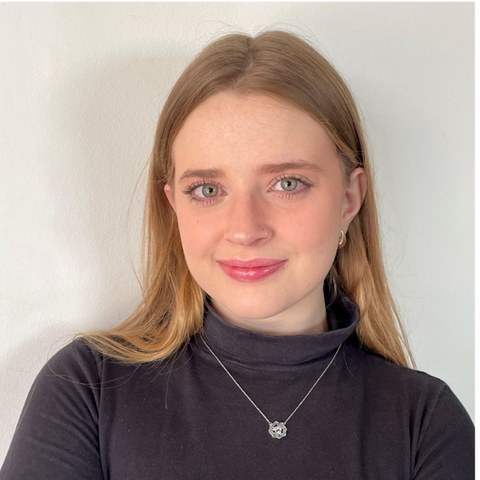
Carolina de Almeida Pernambuco Moron

Carolina de Almeida Pernambuco Moron

Mawu: From Voice to Response · Advisor: Prof. Katerina Siira · Contributed to the Malawi Voice Data Commons

Encoding peacebuilding theory in a geospatial early-warning and referral architecture for Malawi, defended August 31. Mawu is a crisis dashboard and routing-response framework: 267 verified incident records across 27 of Malawi's 28 districts, a 53-actor responder directory, 13 rights-based categories and 11 root-cause drivers, with consent-gated routing in which a human decides every referral.

The central finding came from the fieldwork breaking the design. The one-incident-to-one-responder model failed, and routing now resolves a situation first, through five triage states, and the category second. It reports a 21 to 35 percent formal-response gap depending on stated assumptions, and publishes 57 limitations generated from the repository.
🔗 Open the dashboard →

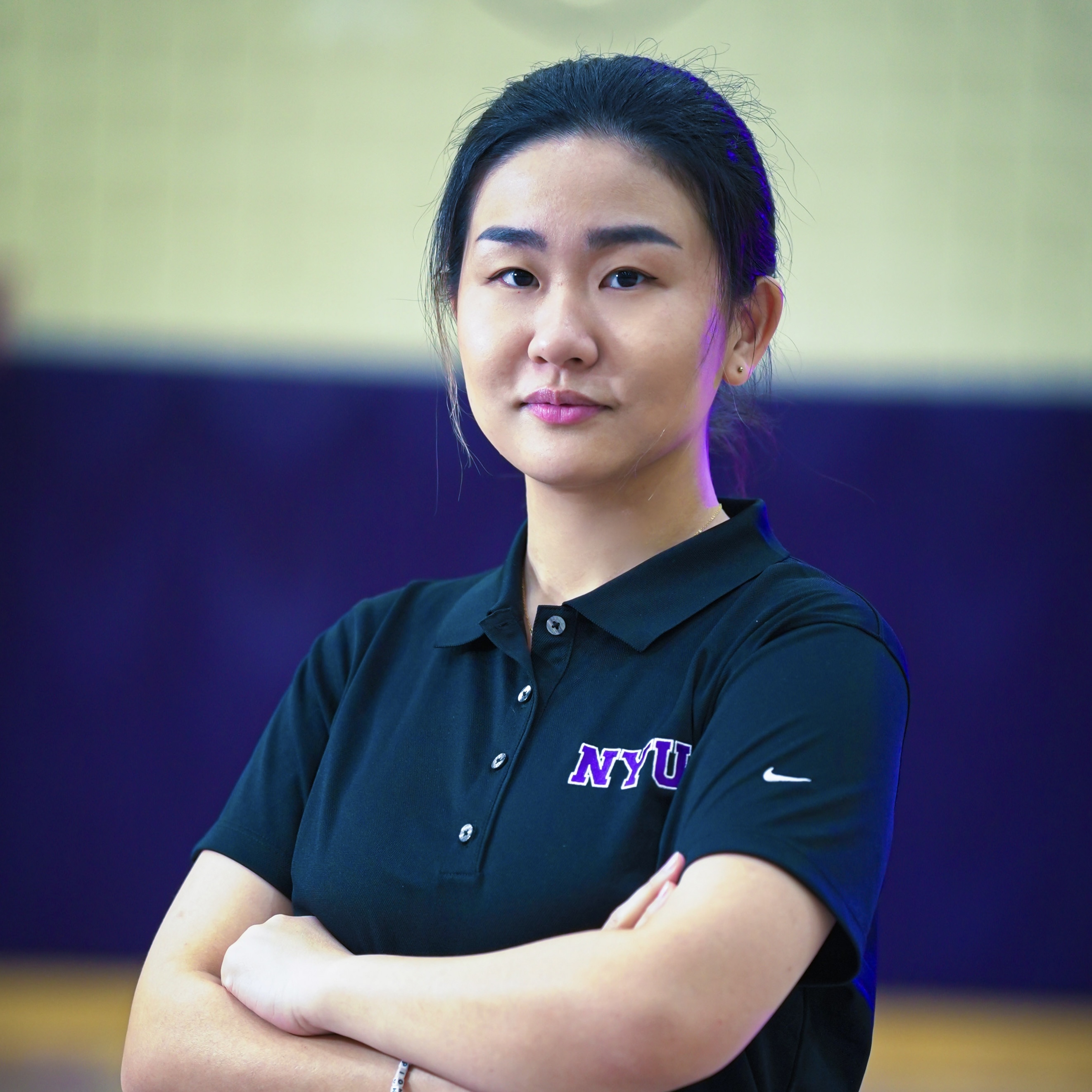
Alex Du

Alex Du

Human Rights Due Diligence, Information Asymmetry, and the Limits of Good-Level Transparency in Global Value Chains · Advisor: Yorke Rhodes III

The study asks whether the evidence a buyer would need to judge a single traded good against human rights due diligence is available at all, and finds that it is not. Across six goods and five dimensions, no independent assessor covered more than three of five, and no good carried an independently evidenced claim on either rights-bearing dimension. A retrieval against commercial supply-chain intelligence was admissible for two dimensions and rejected for three, on the grounds that the numbers were available but would have been wrong.

The raw inputs are largely public; what is proprietary is the entity resolution that makes them usable. The framework refuses a composite score on principle, since a good Value score cannot offset a bad labor one.

🔗 Reference implementation →

🛰 Reading this month's paper against the EII

Evacuation Information Index · equity scoring

Our Evacuation Information Index scores crisis information on quality, accessibility, and equity. This month's Paper Worth Reading (below) measures exactly the failure the equity family is meant to catch: the same evacuation alert, delivered by text and by voice, produces different answers from the same model, and the answers are least faithful for hard-of-hearing users.

It is a reminder that an index of information access has to score the channel, not only the content. We will say more once we have run its prompts against our own alert corpus.

Coming soon: AI Reading Group · Lightning Talks · Startup Founder Series · Research Showcase · Mentor Office Hours
The stories everyone should know

🌀 Google DeepMind open-sources WeatherNext Cyclones

A day of extra warning, and the code to run it yourself

On August 6, Google DeepMind published "Operational tropical cyclone forecasting with AI" in Nature and released the code and weights for three models: WeatherNext Cyclones, WeatherNext 2, and WeatherNext 2-mini. The paper, with co-authors at NOAA's National Hurricane Center, Colorado State University, and the UK Met Office, reports that the cyclone model's track, intensity, and wind-radii forecasts offer on average a day or more of lead time over leading operational models, an improvement the authors compare to the previous decade of operational progress. The National Hurricane Center ran the model during the 2025 Atlantic season, including Hurricane Melissa.

Why it matters: evacuation orders are only as good as the forecast behind them. A day of extra lead time is the difference between an orderly departure and a corridor that fills after the roads flood. The mini model runs at one-degree resolution in a free Colab notebook, which puts a usable ensemble forecast within reach of emergency managers without a supercomputer. The lead-time claim is the developers' own, measured against 2025 operational baselines, and has not yet been independently reproduced.

Why Ethical Tech CoLab loves it

  • Open source: github.com/google-deepmind/weathernext (Apache 2.0 for code; check the LICENSE file for weights)
  • Humanitarian impact
  • Used operationally, not only benchmarked
  • Runs in resource-constrained settings

📄 Paper in Nature · 🔗 DeepMind announcement

🌾 WFP's HungerMap Live 2.0 reached 48,000 people in Somalia before the spike

Anticipatory action, measured by who it reached

UN News reported on August 3 that the World Food Programme's HungerMap Live 2.0, released in April, flagged deteriorating conditions in Burhakaba district, about 180 kilometres northwest of Mogadishu, before child malnutrition rose. WFP delivered food assistance to 48,000 people and nutrition support to 3,000 women and children. "Instead of waiting for that malnutrition of children to deteriorate and lead to displacement or even death, we knew it prior," said Simon Renk, WFP's head of vulnerability analysis and mapping.

The context is bleak: six million Somalis face hunger, WFP can reach roughly one in ten, and it needs a further US$192 million through January 2027.

🔗 UN News · Channel Africa

⚠️ The New Humanitarian: an AI-targeted cash program that left flood victims behind

Anticipatory action, measured by who it missed

On August 31, The New Humanitarian published an investigation into GiveDirectly's 2024 anticipatory-cash program in Ibaji, Kogi State, Nigeria, funded through a US$4.6 million Google.org grant shared with the International Rescue Committee and triggered by Google Flood Hub forecasts. Nearly 39,000 people pre-enrolled by phone. About 4,600 received transfers of US$105 before the flood and US$210 afterward. Nearly 1,000 applicants failed biometric ID checks and thousands more were disqualified at in-person verification or could not be reached.

GiveDirectly corrected its earlier claim of "4,600 households" to "4,600 individuals," and its vice president Stella Luk acknowledged that a phone-based design "inherently excluded" people with limited access. GiveDirectly's own program page reports that recipients' weekly income more than doubled and that all 53 targeted communities did flood in October 2024.

We include this alongside the WFP story on purpose. Both are anticipatory programs targeted by models; one is being measured by who it reached, the other by who it missed. Both measurements are necessary. This is a single-outlet investigation; read the original and GiveDirectly's response together.

🔗 The New Humanitarian · GiveDirectly

🧬 AI for science, in brief

Three access and funding moves in August. On August 13, the OpenAI Foundation committed an initial US$100 million to the Common Health Coalition's Breakthroughs to Follow-Through initiative, aimed at doubling hepatitis C cure rates starting in Alabama, Illinois, Louisiana, and Massachusetts; the grants are not tied to any particular AI platform. On August 20 and 31, Microsoft Research released Skala 1.1, a deep-learning density functional integrated into CP2K, Psi4, and FHI-aims, and the Apache-licensed GigaPath-Flash pathology models, which reach about 97 percent of GigaPath's predictive performance at roughly one-fiftieth of the compute. On August 27, Anthropic opened 10,000 Claude seats for scientists at academic and nonprofit institutions and extended its AI for Science credits beyond biology, with up to US$50,000 per project.

Three governance stories we are tracking

The EU AI Act's transparency rules are now in force

As of August 2, providers must disclose when people are interacting with an AI system, mark synthetic audio, image, video, and text in machine-readable form, and deployers must label deepfakes and notify people exposed to emotion recognition or biometric categorization. The one grace period: generative systems already on the market before August 2 have until December 2, 2026 to comply with the marking duty. Fines run up to EUR 15 million or 3 percent of worldwide turnover.

On July 31 the Commission reported about 190 signatories to its voluntary Code of Practice on AI-generated content, including Anthropic, Google, Meta, Microsoft, and OpenAI. Separately, the AI Omnibus regulation that entered into force July 27 moved stand-alone high-risk obligations to December 2027 and product-embedded ones to August 2028, and added a ban on AI systems for non-consensual intimate imagery effective December 2, 2026.

Colorado publishes draft rules for its replacement AI law

Comments open until October 26

Colorado's original AI Act was replaced in May by SB 26-189, the Automated Decision-Making Technology Act, effective January 1, 2027. On August 11 the Attorney General filed proposed rules covering pre-use notice, plain-language explanations of adverse decisions within 30 days, three-year record retention, and meaningful human review, plus companion rules for the Chatbot Safety Act on age verification and protections for minors. A public hearing is set for October 26.

If you work on automated decisions that touch people's housing, jobs, or benefits, this is the US rulebook to read.

California sends sixteen AI bills to the Governor

The legislature adjourned August 31 with bills on the Governor's desk covering automated decision systems in employment (SB 947), a ban on workplace AI that collects neural data or infers emotional state (AB 1883), independent child-safety audits for chatbots (SB 1119), a registry and verification bodies for AI auditors (SB 813 and AB 1405), and bias-risk disclosure for clinical decision support (SB 503). The Governor has 30 days to sign or veto. The Transparency Coalition counts 85 new AI laws across 27 states as of July.

Bill summaries here come from law-firm and advocacy digests; check the text at leginfo.legislature.ca.gov before quoting.

Anticipatory aid meets its audit

The trend this month is not a new model. It is that AI-targeted anticipatory action is now producing measured wins and documented exclusion in the same month, and the field is starting to count both. Targeting accuracy is not the same as inclusion. An evaluation that counts only the people reached is half an evaluation.

⭐ Altana

What they do: Altana builds a shared system of record for products and their value chains, using AI over public and private trade data to trace how goods move through the global economy. US Customs and Border Protection uses its Atlas platform to prioritize enforcement under the Uyghur Forced Labor Prevention Act, and the company joined the Global Alliance for Trade Facilitation as a business partner in February.

Why we're watching

Supply chain traceabilityForced labor enforcementKnowledge graphsGovernment deployment

Hiring note: seventeen openings, all senior or specialist (principal product, staff engineering, federal sales, government affairs in Brussels). No analyst roles open.

⭐ Floodbase

What they do: Floodbase maps flood extent continuously from satellite imagery and hydrological models, and sells the output as parametric insurance triggers. It mapped more than 500,000 square miles across nine states for FEMA during the 2024 hurricane season, powers a parametric program covering 25,000 churches in Italy, and launched instant flood quoting with Liberty Mutual for the US commercial market in February.

Why we're watching

Crisis mappingNear-real-time flood dataHumanitarian use inside a commercial model

Hiring note: one opening, VP of Product, New York or Boston. No analyst roles.

⭐ Prime Intellect

What they do: Prime Intellect runs a cloud platform for fine-tuning and deploying open-source models across distributed GPU clusters and describes its goal as an open superintelligence stack. It raised US$130 million at a US$1 billion valuation on July 8, led by Nvidia's NVentures, Intel Capital, and Dell Technologies Capital.

Why we're watching

Open-source AI infrastructureDecentralized trainingOpen by default

Hiring note: around 25 roles, almost all research engineering. One non-engineering research role, Applied Research (Evals and Data) in New York, plus an internship and an open application for unconventional talent. The board requires JavaScript, so confirm in a browser. jobs.ashbyhq.com/PrimeIntellect

Fellowships and programs open now

Watch for the next cycle

Organizations hiring right now

OrganizationRoleNotes
International Rescue Committee, Airbel Impact LabResearch Associate, EducationRemote from the US, Kenya, or Colombia; MA plus up to three years' experience; Stata, R, or Python; US$80,000 to US$95,000; posted August 21
Recorded FutureFraud AnalystNew York, DC, or Boston; one to two years including internships; US$78,500 to US$117,500; requires professional Chinese
Centre for the Governance of AIDC Research ManagerWashington, DC; associate level considered for promising candidates; deadline September 13
Centre for the Governance of AIResearch Manager, UK FellowshipsLondon; deadline September 27
Brookings, Global Economy and DevelopmentResearch Analyst, Workforce of the FutureDC hybrid; two years' empirical research; US$60,000 to US$66,000; page live but posted in February, so confirm before applying
Center for Democracy & TechnologyAcademic Year Externship, Fall 2026 and Spring 2027DC, partially remote, unpaid for credit; enrolled students; deadline March 15, 2027
A note on this month's market: Partnership on AI, AI Now, Data & Society, the Center for AI Safety, Ada Lovelace Institute, Sayari, Kharon, Tavily, and Microsoft's AI for Good Lab have no early-career research or analyst roles open. Coinbase's Global Intelligence Analyst posting from July is gone. The Anthropic Institute "Analyst" and OpenAI "External Affairs Associate" titles look junior and are not: both require seven or more years or an established network. Fellowship cycles above remain the better door this quarter.

Early career skills to build

✅ Python✅ GitHub✅ Prompt engineering✅ AI evaluation✅ RAG✅ Data visualization✅ Policy writing✅ Impact assessment methods (new this month)

WeatherNext 2-mini in Colab

The same August 6 release that leads this issue ships something researchers can use today: WeatherNext 2-mini, a one-degree-resolution version of the model that runs in a free Google Colab notebook, with weights available through a public Cloud bucket, Earth Engine, BigQuery, and Vertex AI, and live outputs viewable in Weather Lab. The repository also carries the legacy GraphCast and GenCast models.

Great for

  • building a 15 day ensemble forecast for a crisis region without a cluster
  • testing how forecast uncertainty changes evacuation timing in a simulator
  • teaching students what an AI weather model actually outputs
  • pairing forecasts with displacement or hunger data in an index

Our rating: ⭐⭐⭐⭐

One star withheld until we have run it end to end on our own hardware. Repository

Evaluating Multimodal LLMs across Text and Audio Modalities for Accessible Disaster Assistance

Gupta, Mansoor, and Purohit · George Mason University · arXiv

The Humanitarian Informatics Lab gave three open-weight audio-language models (AudioFlamingo 7B, SALMONN, and Qwen3-Omni) 40 prompts built from real FEMA emergency alerts, delivered once as text and once as audio, on behalf of four personas: pregnant women, mothers with toddlers, hard-of-hearing people, and elderly people with dementia. No model answered consistently across the two channels. Qwen3-Omni held its meaning best between text and audio (semantic similarity 0.896) against 0.625 for SALMONN and 0.495 for AudioFlamingo, and factual overlap was lowest for the hard-of-hearing persona across all three models. The authors call this "modality-dependent inequity."

It is eight pages, the figures are the authors' own, and the prompts and logs are promised with the camera-ready version rather than released now. Read it for the method: it is a template for auditing any assistant that will be asked for evacuation advice by voice.

📄 arXiv

Also from our own shelf: What Is Ethical AI?

Ethics, Ethical Technology, and Ethical International Relations for the Age of Intelligent Machines

Our foundational paper, and the one to start with if you are new to the CoLab. It traces ethics from the earliest civilizations through international affairs and human rights law to the responsible AI movement, the humanitarian sector, and the United Nations system, and defends an institutional answer: ethical AI is not a product feature but artificial intelligence whose whole lifecycle stays accountable to ethical deliberation, a human rights floor, the do no harm obligation, and the participation of those it affects. It closes with the CoLab's own motivation and research philosophy.

Every judgment we make in this newsletter — including the two anticipatory-aid stories above — rests on the argument in this paper.

📖 Read it on the site → · PDF · Repo

Your Undivided Attention: We Measure What AI Can Do. We Should Measure What It Does to Us. (August 27, 2026). Aza Raskin with Imran Khan and Jared Moore on the Center for Humane Technology's Humane Evals initiative, and why almost nothing in the field measures an AI system's effect on users' cognition and wellbeing.

The AI Policy Podcast (CSIS): Responding to AI Agent Containment Failures (August 27, 2026). Helen Toner of CSET, Mackenzie Arnold of the Institute for Law and AI, and CSIS's Matt Pearl on incident reporting, lab incentives, and what governments can do when an agent exceeds its sandbox.

Ghost in the Machine (2026), directed by Valerie Veatch. Premiered at Sundance in January and picked up by Independent Lens; PBS broadcasts it on September 14, with streaming in the PBS app. The film traces how human biases and power structures embedded in AI reach into society and the environment, and critics have read it as a direct challenge to AI hype.

Also worth revisiting: Coded Bias (2020), Shalini Kantayya's account of Joy Buolamwini's discovery of racial and gender bias in facial recognition and the campaign for algorithmic accountability that followed. On Netflix.

The Rise and Fall of the Artificial State, by Jill Lepore (Liveright, August 25, 2026). Drawing on Arendt, the Harvard historian argues that data-driven systems and a small group of technocrats are displacing democratic institutions, producing government without consent, and that none of it was inevitable. Longlisted for the Financial Times Business Book of the Year. Lepore discusses it on the August 21 episode of Hard Fork.

This section rotates monthly. Each edition features one mentor: biography, expertise, current role, office hours, and LinkedIn.

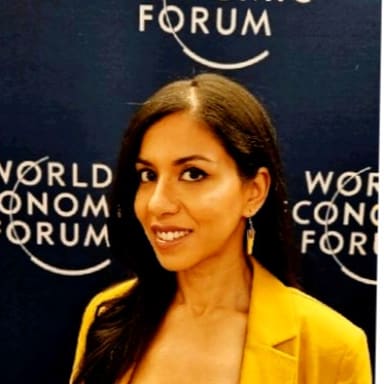
Sabeen Sidiqui

Sabeen Sidiqui

Tech policy · Strategic foresight · Innovation consulting · AI deployment

Sabeen Sidiqui has spent 15 years helping CEOs and policymakers make sense of complicated technology. Across the World Economic Forum, KPMG, and several agencies, she has worked where AI, frontier tech, policy, and big ideas collide. Her experience spans tech policy, strategic foresight, innovation consulting, and AI deployment. Now based in New York, she is offering counsel, candid conversation, and perhaps a few lessons learned the hard way.

📅 Office hours: Book a slot with Sabeen →

🔗 LinkedIn

Mentor tracks we are recruiting for: AI governance, humanitarian technology, blockchain for social impact, startup founders, and UN innovation specialists. Want to mentor? Reply to this email.

Question of the Month

When an AI-targeted aid program reaches some people and excludes others, how should its success be measured, and who should be accountable for the people it missed?

We'll feature selected responses in next month's newsletter.

Join the community

August's stories share a discipline rather than a theme. A cyclone model was judged against operational forecasters, not a benchmark. A hunger map was judged by the children it reached before they were malnourished. A cash program was judged, belatedly, by the people it turned away. Our own report this month keeps three registers apart: built and validated, built and unvalidated, and proposed. That is the standard we want to be held to, and the one we will keep applying to the work we feature.